Kinetic Biology
The Role of Delivery Dynamics
Traditional models often focus on the identity of a molecule — what it is. Our framework also considers how signals are delivered.
Biological systems must continually balance incoming signals with their ability to process them. When delivery dynamics shift, downstream physiology shifts with them.
Kinetic biology studies:
signaling timing
metabolic flux
adaptive physiological responses
This perspective helps explain why similar inputs can produce very different outcomes depending on biological context.

Matrix Biology
Context Shapes Physiology
Biological signals rarely exist in isolation. They arrive embedded within structured environments — what we refer to as biological matrices.
These matrices influence physiology through three broad dimensions:
Structure - Physical architecture shapes how signals interact with digestion and metabolism.
Chemistry -Naturally occurring compounds influence enzymatic and signaling pathways.
Biology -Microbial ecosystems contribute signaling molecules that interact with host systems.
Rather than simplifying biology to a single variable, Amara studies how these dimensions interact as a unified system.
Gut-Liver-Brain Axis
A Distributed Signaling Network
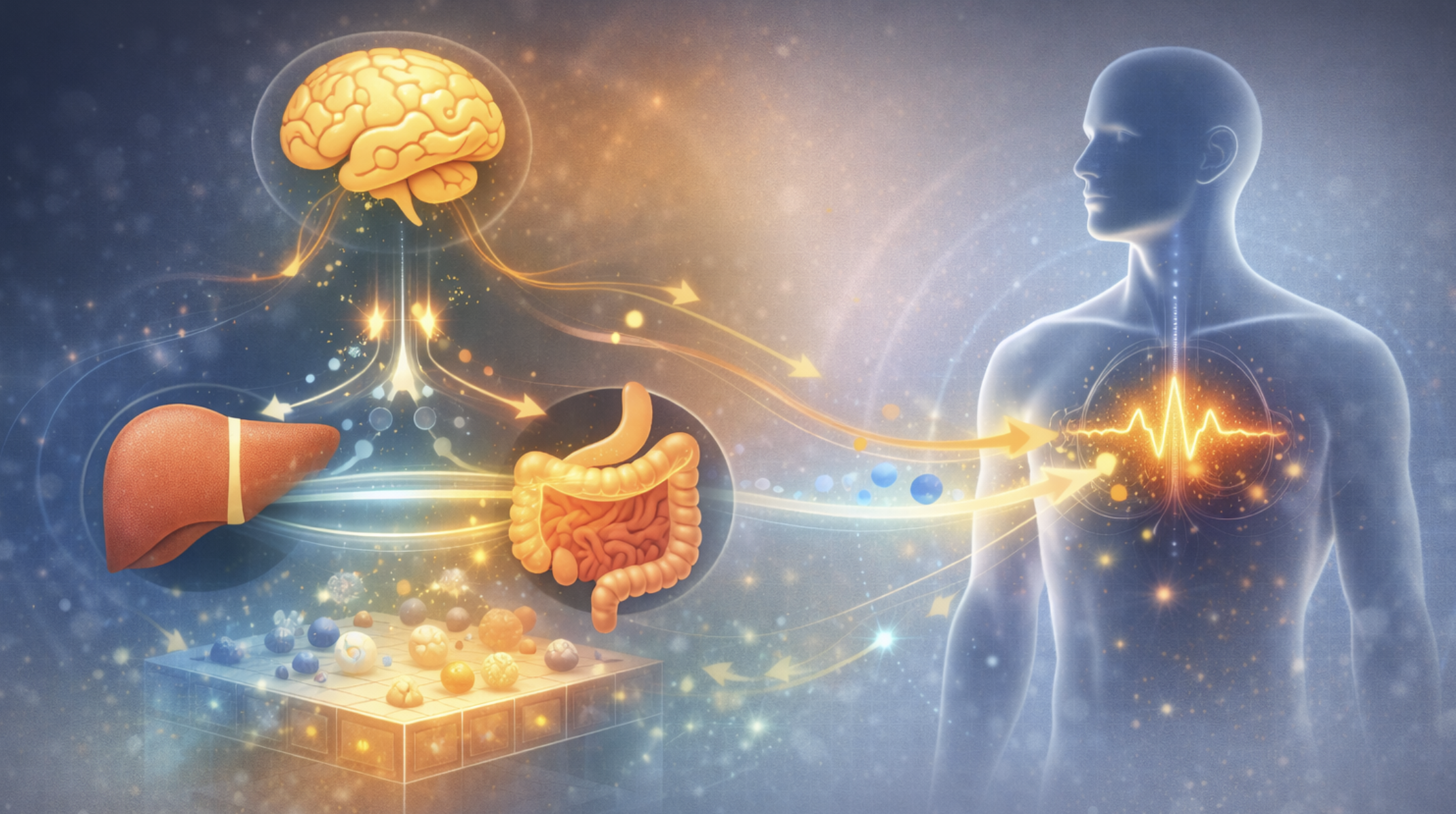
This distributed network influences metabolic regulation, inflammation, behavioral signaling, and physiological adaptation.
Amara’s thesis is that coordinated biological signals along this axis represent an underexplored frontier for therapeutic discovery.
The gut communicates continuously with the liver, immune system, and brain through:
hormones
metabolites
immune mediators, and
neural pathways.